R&A Electronics Market Watch | August 2026
Samsung Signals Memory Tightness Could Extend Through 2028
Multi-year data center agreements are shifting memory supply toward longer commitments, upfront payments, and floor pricing.
Semiconductor Supply Chain Update | August 2026
Key Takeaway
Samsung expects memory supply constraints to become more severe and potentially extend through 2028. At the same time, major data center customers are moving toward multi-year supply contracts that can include upfront payments, minimum price protection, and commitments lasting at least five years. The result is a memory market increasingly shaped by contracted capacity rather than short-term purchasing alone.
The memory market is moving into a different type of supply cycle. Strong demand remains important, but the structure through which capacity is being allocated may become equally significant.
Samsung reported that its memory business achieved record quarterly revenue and operating profit in the second quarter of 2026. The company expects demand for server DRAM, enterprise SSDs and HBM to accelerate during the second half of the year, keeping the market undersupplied despite softer conditions in selected mobile and PC applications.
More importantly, Samsung is expanding the use of long-term supply agreements with major data center operators. These contracts may change how memory capacity is reserved, how prices are negotiated and which customers receive priority when supply remains limited.
For procurement teams, the issue is no longer only whether DRAM, NAND or HBM prices will continue rising. The wider question is how much future production will remain available outside strategic contracts.
Through 2028
Samsung expects semiconductor memory supply constraints to potentially remain severe through 2028.
About 2/3
Samsung aims to cover approximately two-thirds of its memory output through longer-term contracts.
5+ Years
New supply agreements may last at least five years and can include upfront payments and floor pricing.
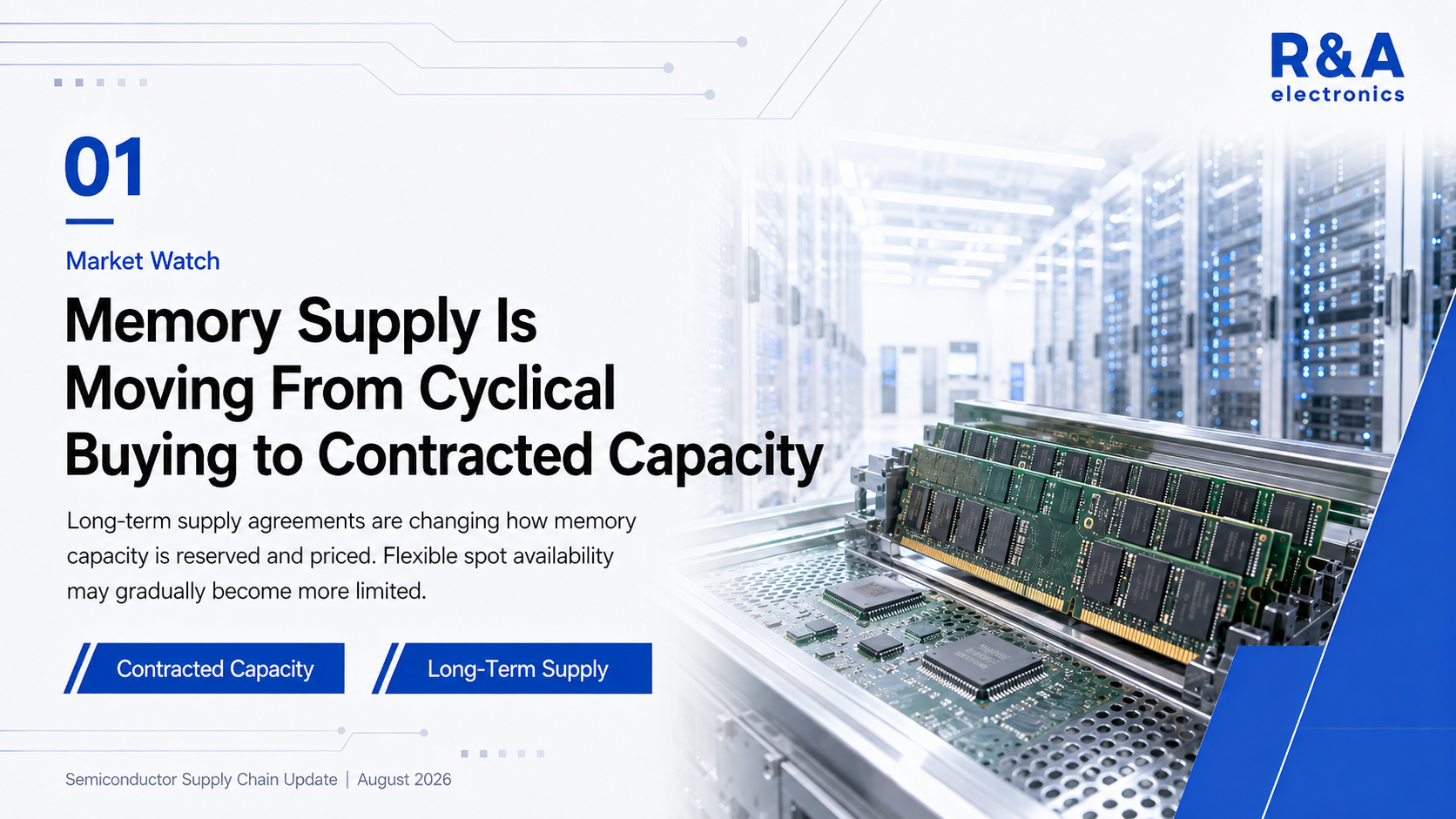
Memory has traditionally been one of the semiconductor industry’s most cyclical categories. Periods of rapid investment and oversupply have often been followed by price declines, production cuts and delayed capital expenditure.
The latest supply agreements suggest that leading manufacturers and data center customers are trying to reduce this volatility. By committing future volumes through longer contracts, suppliers gain stronger visibility before investing in new wafer capacity, cleanrooms, equipment and advanced packaging.
Buyers may receive more predictable access to strategic memory products. Suppliers may also gain stronger protection against a future downturn through upfront payments, minimum purchasing commitments and floor pricing.
This could gradually reduce the amount of flexible capacity available for conventional spot purchasing. Customers without long-term arrangements may become more exposed to allocation changes, shorter quote validity and sudden price movement.
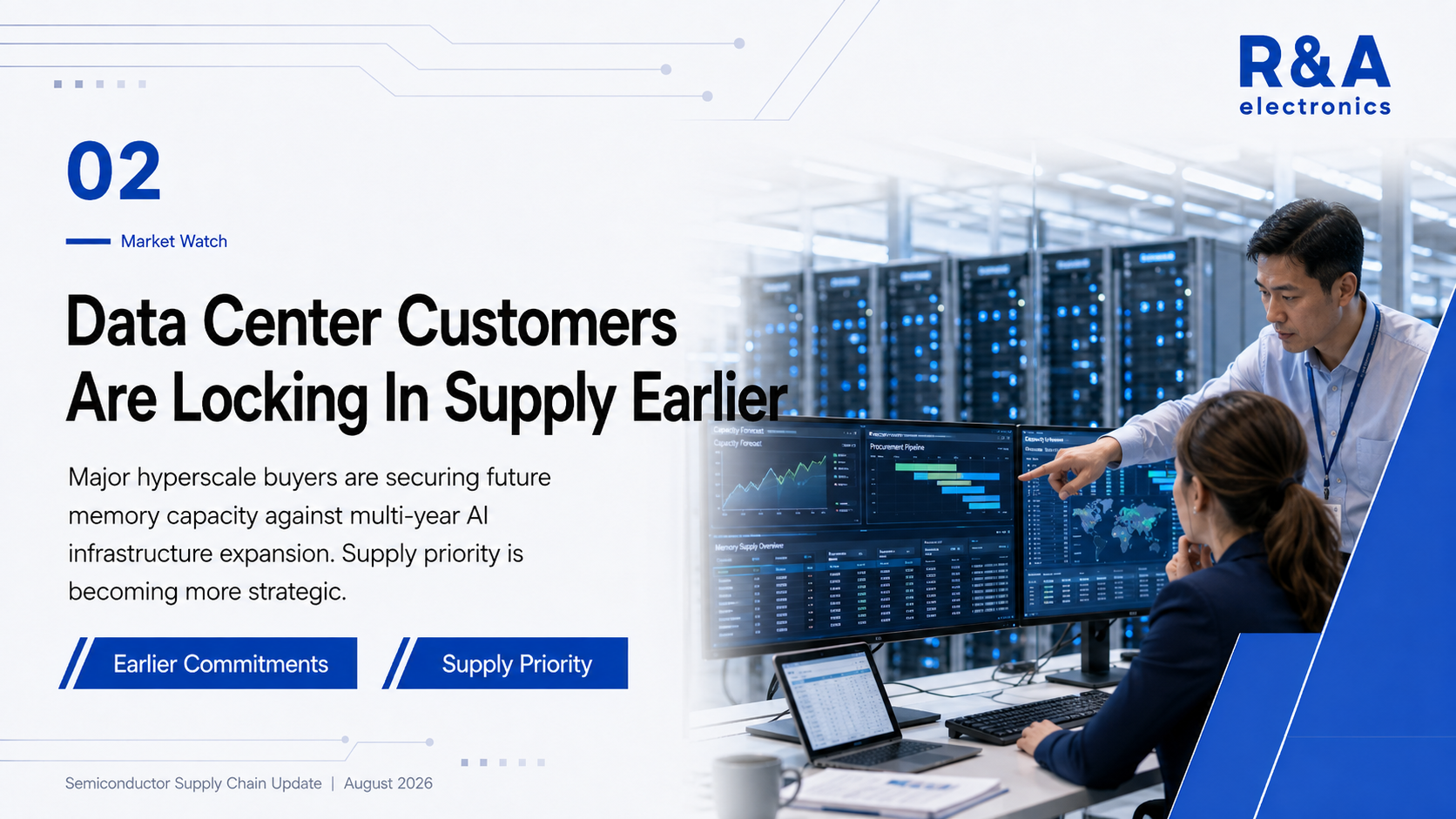
Samsung has reportedly signed supply agreements with the five largest global data center companies and is approaching agreements with five additional major customers. The companies involved have not been publicly identified.
The scale of these discussions shows how memory procurement is becoming connected to multi-year data center deployment plans. Hyperscale operators are no longer purchasing memory only for current server requirements. They are attempting to secure supply against future AI infrastructure expansion.
Long-term commitments can give major customers stronger capacity visibility, but they may also create a clearer hierarchy of supply priority. When capacity is constrained, customers with committed volume, financing support and long-term forecasts may receive more predictable allocation than buyers relying on shorter purchasing cycles.
This does not mean the entire memory market is becoming unavailable. It means future access may depend increasingly on contract structure, forecast quality and strategic importance to the supplier.
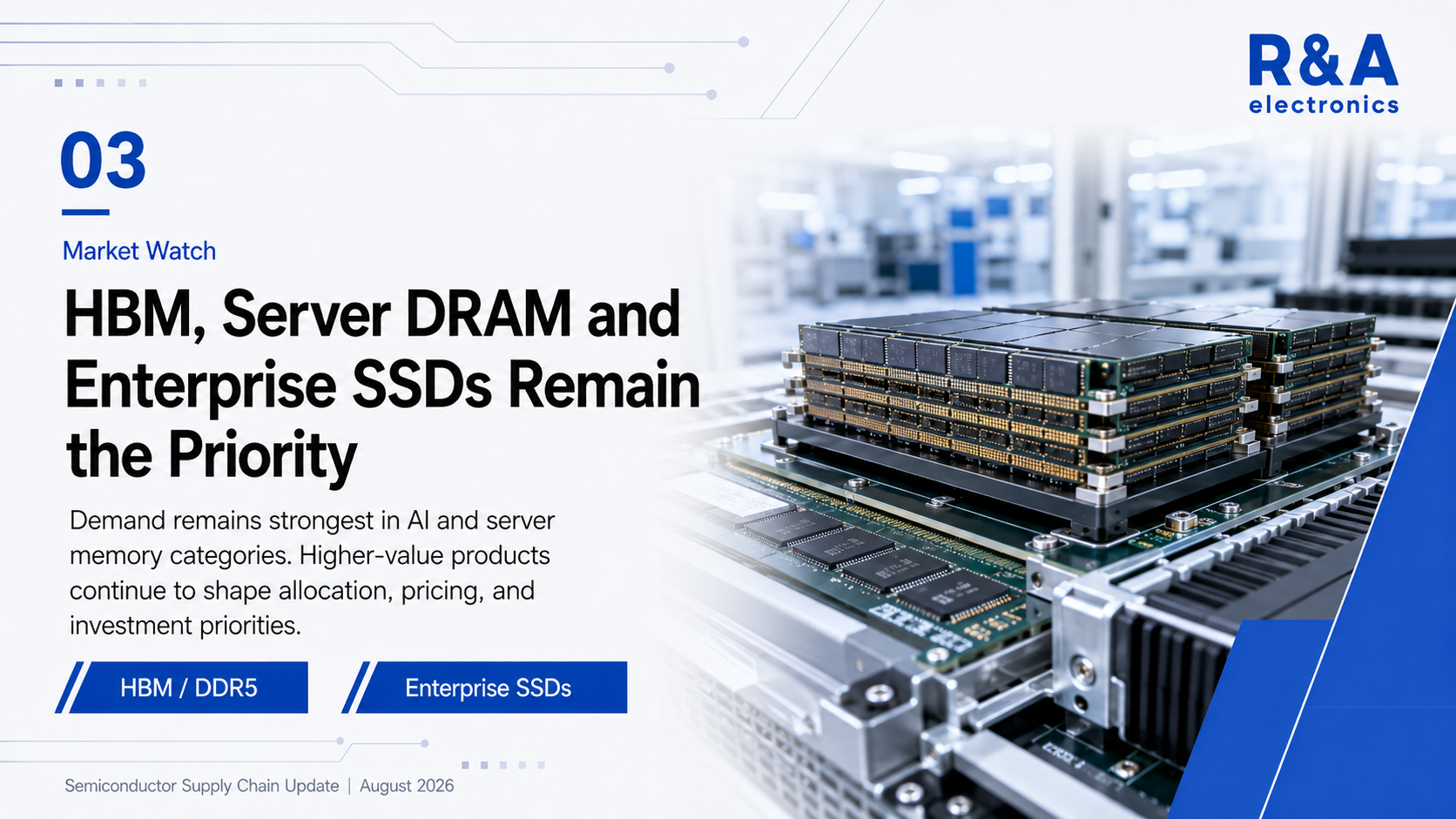
The strongest demand remains concentrated in server and AI-related memory products. Samsung expects growth in server DRAM, enterprise SSDs and HBM to accelerate during the second half of 2026.
The company is focusing its portfolio on higher-value products including HBM4, DDR5 and SOCAMM2. This reflects the increasing memory content required by AI accelerators, high-performance servers and next-generation data center platforms.
HBM creates particularly demanding capacity requirements. Its supply depends not only on memory wafer output, but also on advanced packaging, stacking, testing, yield improvement and close alignment with accelerator qualification schedules.
Enterprise SSD demand also connects NAND supply with controller availability, firmware qualification, power efficiency and thermal design. As data center customers secure more server-oriented capacity, the effect can extend beyond a single memory product.
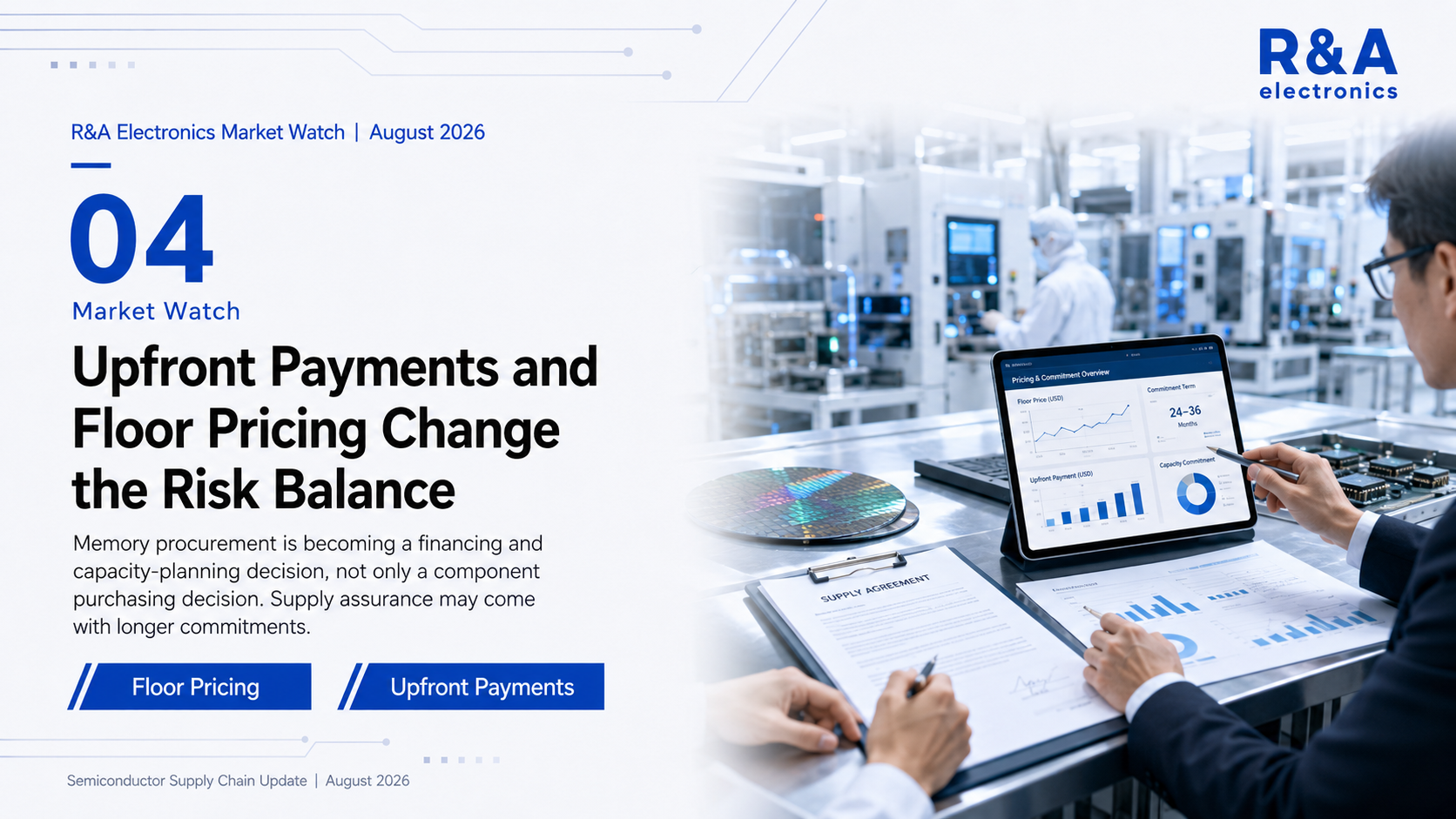
The reported contract structure is also important. Agreements may include upfront payments and floor pricing designed to reduce the investment risk associated with new memory capacity.
Building and qualifying new production capacity requires significant capital, while market conditions can change before the additional output becomes available. Advance payments can help finance expansion, and minimum price protection can reduce the risk that suppliers invest heavily before a future pricing downturn.
For customers, these arrangements can provide better supply assurance. However, they may also reduce purchasing flexibility and create obligations extending across several product and pricing cycles.
Memory procurement is therefore becoming partly a financing and capacity-planning decision, not only a component purchasing decision.

AI infrastructure is the strongest demand driver, but the consequences may extend into mobile devices, PCs, networking equipment, industrial systems and other memory-dependent applications.
When manufacturers prioritize HBM, server DRAM and enterprise storage, capacity and investment may become less flexible for lower-value or slower-growing product categories. The exact impact will differ by technology, density, process generation and customer qualification.
Rising memory prices can also affect finished-product margins. Samsung’s own second-quarter results showed that strong semiconductor pricing benefited its memory business while increasing component cost pressure across device businesses.
Procurement teams should therefore review both direct memory exposure and indirect cost exposure across products that contain DRAM, NAND, eMMC, UFS or enterprise storage.
Supply Security May Depend More on Forecast Quality
As more capacity becomes connected to multi-year agreements, suppliers may place greater importance on forecast accuracy and purchasing visibility.
Customers with irregular demand, limited forecast commitments or short purchasing horizons may find it more difficult to obtain stable allocation. This is especially relevant for programs with seasonal demand, extended qualification cycles or long product lifecycles.
Buyers may need to separate strategic memory exposure from normal transactional purchasing. Critical programs may require earlier volume planning, clearer supplier communication and greater visibility into the manufacturing origin behind approved parts.
What This Means for Procurement Teams
Procurement teams should not treat the current memory market as a short-term price cycle alone. Capacity allocation, contract duration, financing terms and customer priority may increasingly determine future availability.
Procurement teams should monitor:
- Supplier allocation by customer and application
- Long-term contract coverage
- Upfront payment requirements
- Floor pricing and minimum commitments
- Forecast submission requirements
- Quote validity and spot-market movement
- Approved alternative readiness
Categories to review:
- AI memory: HBM4, HBM3E and related advanced packaging
- Server memory: DDR5, SOCAMM2 and high-capacity DRAM
- Enterprise storage: NAND, eSSDs and storage controllers
- Embedded memory: eMMC, UFS and managed NAND
- Long-lifecycle memory: industrial, automotive, medical and networking products
R&A View
The most important change is not simply that memory demand remains strong. It is that a growing share of future capacity may be reserved through strategic, multi-year agreements.
This may create greater stability for manufacturers and large data center customers, while reducing flexibility for buyers that depend on shorter contracts or spot availability.
Procurement teams should review which memory products are essential to long-lifecycle programs, which suppliers have sufficient capacity visibility and whether approved alternatives can be qualified before allocation becomes more selective.
R&A Electronics will continue to monitor DRAM, NAND, HBM, enterprise storage and embedded memory supply signals as contract structures and capacity priorities evolve.
Procurement teams should not only ask: “What is the current memory price?” They should also ask: “How much future capacity has already been committed?”
Frequently Asked Questions
Is every memory product expected to remain in shortage through 2028?
No. Samsung’s outlook points to continued industry supply constraints, but the severity will differ by product type, application, density, supplier and contract status. HBM, server DRAM and enterprise storage currently show the strongest demand.
What changes when memory is covered by a multi-year agreement?
Customers may receive greater supply visibility, while suppliers gain stronger demand and investment certainty. Agreements can also introduce upfront payments, minimum volumes, floor pricing and longer forecast obligations.
Does this mean spot-market memory will disappear?
No. Spot and short-term purchasing will remain part of the market. However, availability and pricing may become more volatile if a larger share of production is reserved for strategic customers.
Should every buyer sign a five-year memory contract?
Not necessarily. The right structure depends on demand visibility, product lifecycle, pricing exposure and the cost of supply disruption. Long-term commitments are most relevant where demand is predictable and replacement options are limited.
What should procurement teams do now?
Review memory exposure across the BOM, confirm supplier allocation and forecast requirements, identify products dependent on spot availability and validate approved alternatives for long-lifecycle or difficult-to-replace applications.
Status note:This report reflects public information and company comments available as of August 3, 2026. Contract implementation, memory demand and capacity conditions may change as suppliers and customers update their production plans.
Need support reviewing memory supply exposure?
R&A Electronics helps procurement teams monitor memory pricing, allocation, contract changes and alternative sourcing options across a changing semiconductor market.
Contact R&A

